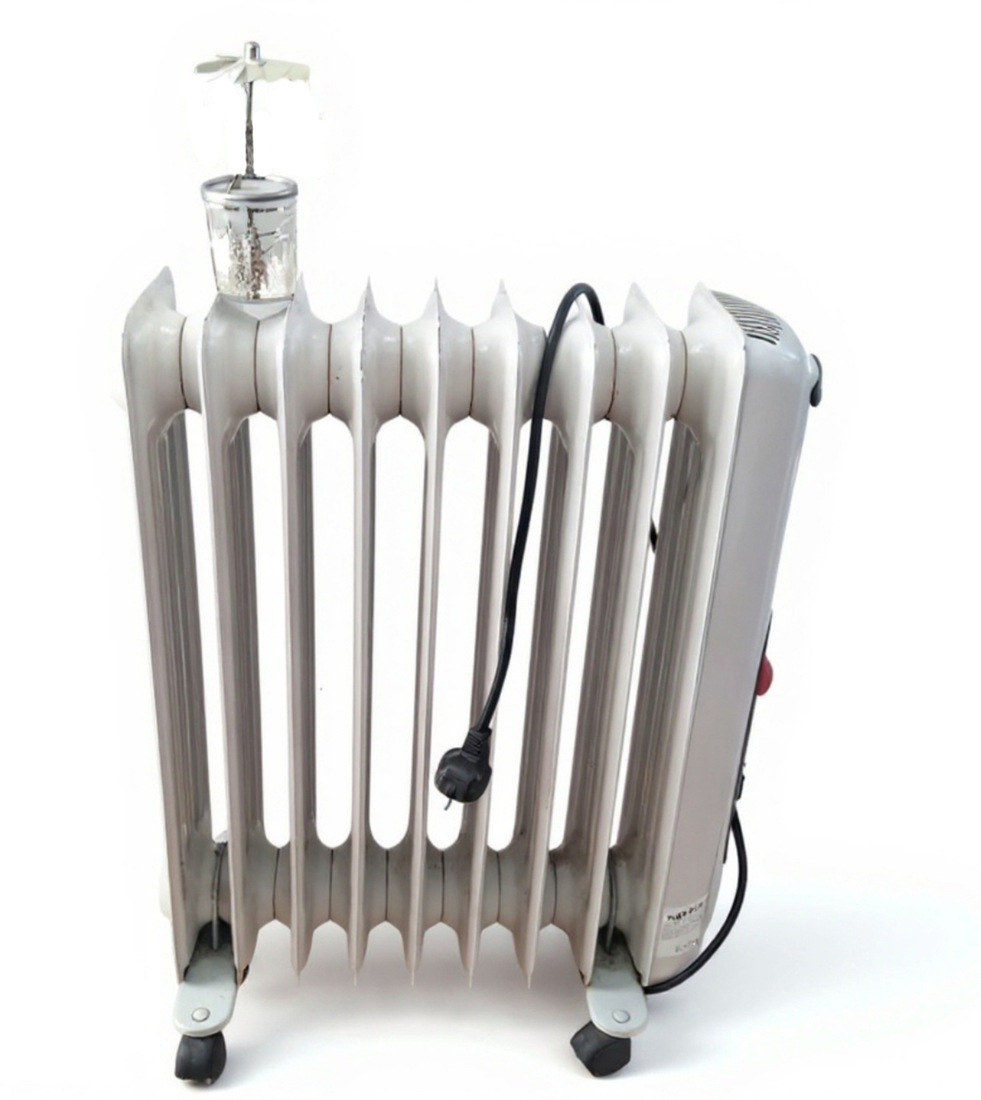
In absentia features a small electric oil radiator alone in a gallery. A lightweight metal convection wheel rests atop it; all decorative elements are removed, leaving only the bare rotating structure. The radiator is linked to an invisible motion sensor: when a visitor enters, it activates briefly. Heat accumulates slowly due to the oil’s thermal inertia, and the wheel often begins to turn only after the triggering visitor has left.
Later visitors may see the wheel in motion without witnessing its cause. The installation creates a temporal gap between action and effect, presence and consequence. Human passage becomes an unseen trigger, with effects persisting independently of their origin. Operating without direct interaction or visible feedback, movement arises from residual heat rather than immediate response, allowing visitors to unknowingly activate experiences for others.
In absentia investigates deferred causality, anonymous agency, and the persistence of effects beyond individual presence.